Программа
Arrival in Windhoek · Check-in · Rest · Dinner
Total transfer time: approximately 40 minutes. All transfers are by modern, air-conditioned minibus.
We arrive at the airport of Namibia’s capital, Windhoek. Windhoek is a pleasant, compact city located more than 1,500 meters above sea level. The city center is built up with modern high-rise buildings, where the country’s business life unfolds — or rather, moves at a relaxed, unhurried pace. Surrounding the center are low-rise residential neighborhoods. Windhoek doesn’t match the stereotypical images many people associate with the words “African city.” It is a comfortable and safe hub of a prosperous country.
After the long flight, we’ll take time to unwind, get to know one another, and over dinner at a colorful local restaurant, go over the details of the journey ahead.
Total transfer time: approximately 5.5 hours
Fish River Canyon · Quiver Tree Forest (Aloe Forest)
A scenic desert highway takes us south across the country. Along the way, we’ll stop at an unusual place.
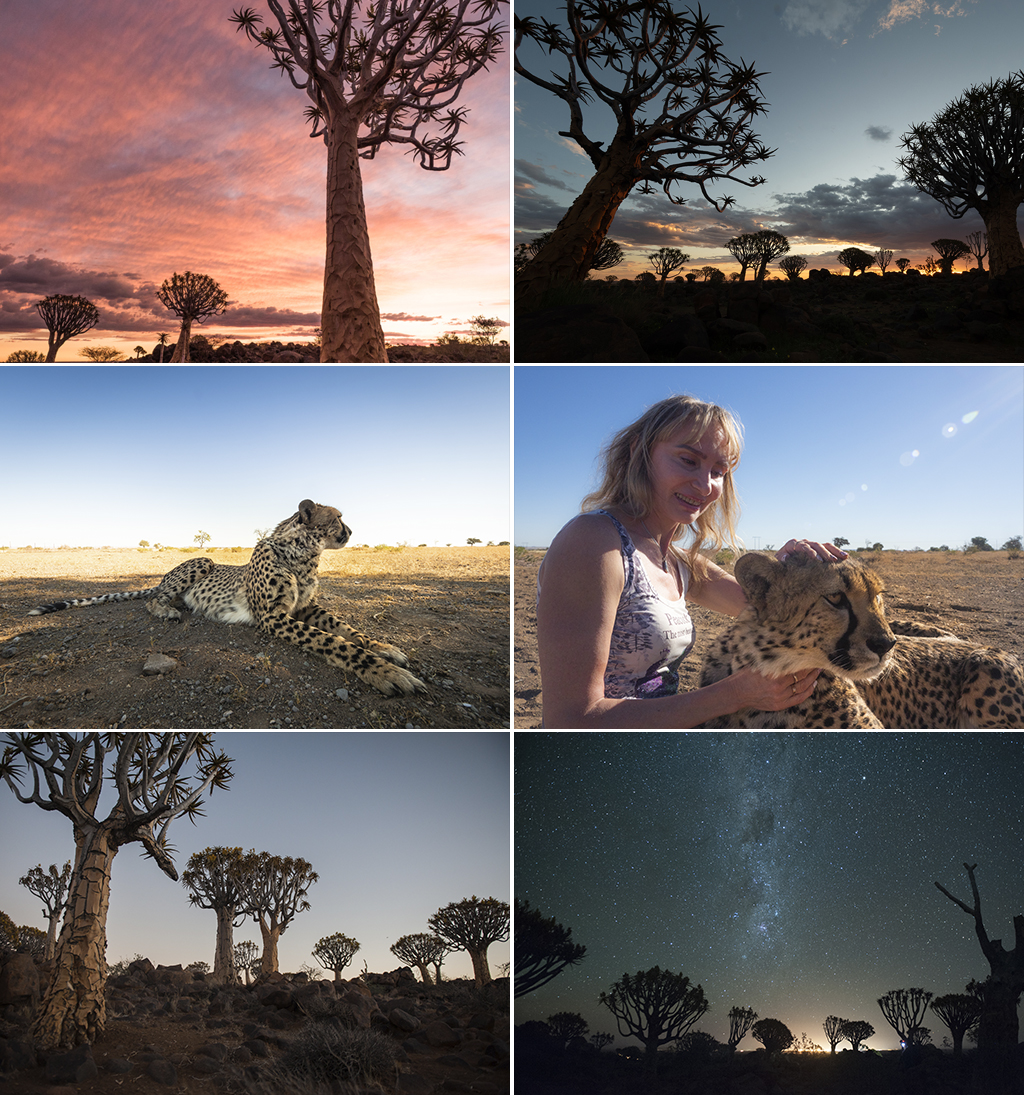
The owners of an old farm, once purchased by settlers from South Africa, allow visitors to admire a natural wonder located on their land.
Amid “blocks” of massive, multi-ton granite boulders lies a grove of so-called dichotomous aloes — fantastical, otherworldly plants. The Bushmen called this giant shrub the “quiver tree”, as its branches were traditionally used to make quivers.
In the past, cheetahs could be petted and fed, but the rules have since changed — the Ministry of Environment has banned such interactions. Today, we can observe these noble animals only during feeding time, which is still a fascinating experience.
We’ll then continue our journey. This evening, we’ll stay near the Fish River Canyon and visit it at sunset.
Fish River Canyon
Total transfer time: approximately 2 hours
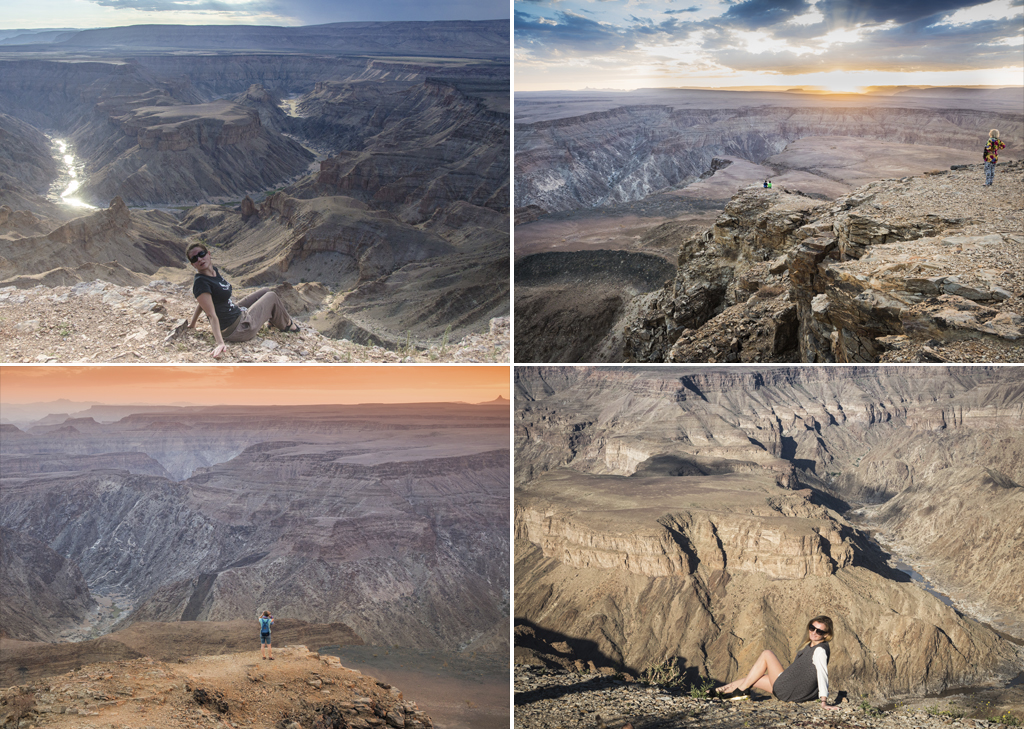
The Fish River Canyon is the second-largest canyon in the world, after the Grand Canyon in the United States.
The view over the Great Fish River Canyon is truly breathtaking. The complex tectonics of the ancient supercontinent Gondwana, combined with the work of the modest Fish River, have shaped a colossal gorge with a distinctive double-floor formation. Here, you can wander along the cliffs, watching the sun wash the rocks in warm shades of orange.
For the night, we’ll stay in a stunning lodge nestled among rocky outcrops and open veld landscapes.
Lüderitz · Kolmanskop Ghost Town · Boat Excursion to Penguin Island · City Walks · Oyster Tasting
Total transfer time: approximately 4 hours
The road calls us onward. Our journey to the Atlantic Ocean leads through open steppes and veld landscapes. Midway, we may encounter herds of wild horses. These friendly creatures graze freely across the savanna. There are no large predators here, and hunting is prohibited, allowing the horses to live in peace. You can often approach them quite closely — they are not shy, but rather curious.
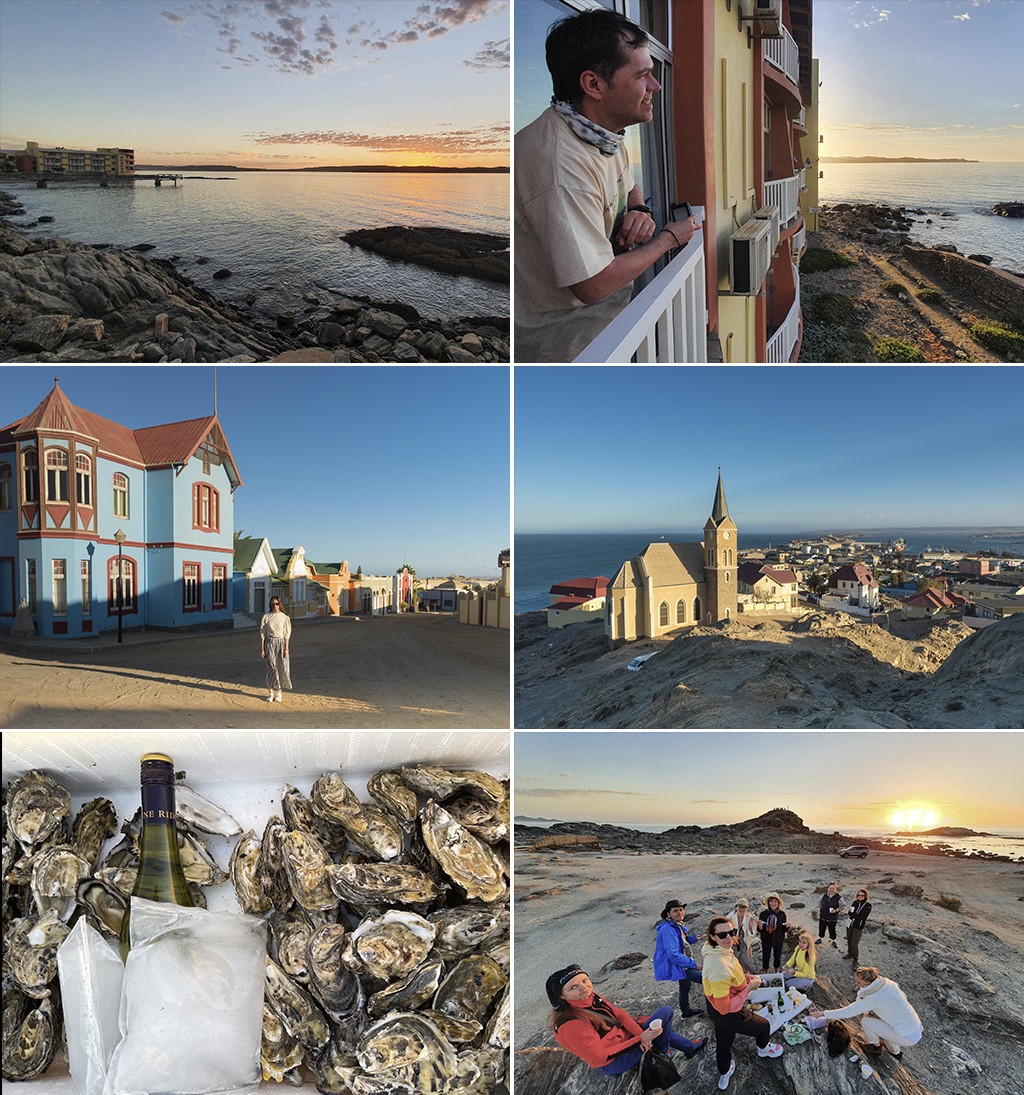
As we draw nearer to the ocean, the landscape becomes increasingly hilly. Wind-driven sand drifts across the road, and soon the small town of Lüderitz appears before us. Our home for the next two nights will be a cozy hotel where every room overlooks the ocean.
Lüderitz is an oasis of German order and prosperity, caught between two elements — the desert on one side and the ocean on the other. The town was founded by German colonists in the late 19th century for the extraction of guano, deposits of decomposed bird droppings used to make fertilizer and gunpowder. Everything changed after diamonds were discovered nearby, drawing the settlers’ attention and fortune toward mining.
Today, Lüderitz is a remarkable place where you can step into a colonial world, feeling the breath of the century before last wrapped in a modern, elegant setting. Bars and hotels are filled with the atmosphere of old Europe. Germans live here who were born, raised, and have grown old on this land — white Africans who call Africa their home.
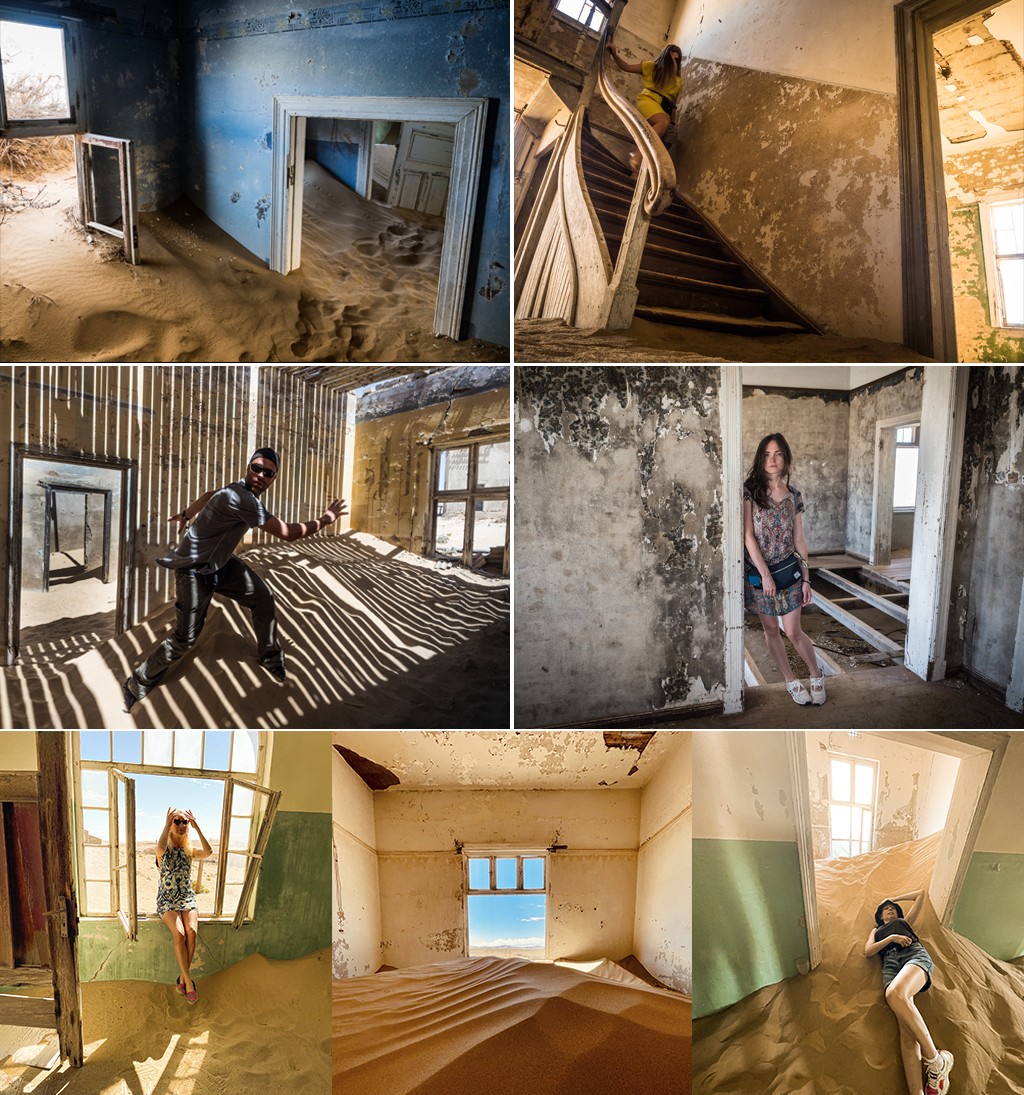
We then set out for the nearby ghost town of Kolmanskop. Such settlements are rare, and Kolmanskop stands apart for its especially mystical character.
Once a thriving diamond mining town — small but well-appointed — it was abandoned more than half a century ago. As the diamond fields shifted, the “diamond barons” moved ever farther south, eventually reaching the border with South Africa at Oranjemund. Governments and regimes changed, and the desert slowly but relentlessly began to reclaim the town. Before the elements, all things are equal — workers’ apartment blocks and managers’ residences, bars and doctors’ offices alike. Sand seeped through broken windows, rose through drying wooden floors, and filled the emptied buildings.
Today, the abandoned town is an open-air museum. Walking here feels like stepping onto the set of an old American horror film.
We will also journey along the long fjord-like coastlines and visit Dias Point, where the first European is believed to have landed on African soil in the late 15th century. A dark Portuguese stone cross stands on a cliff above the raging sea — though when we arrive, it may just as easily be calm. We shall see.
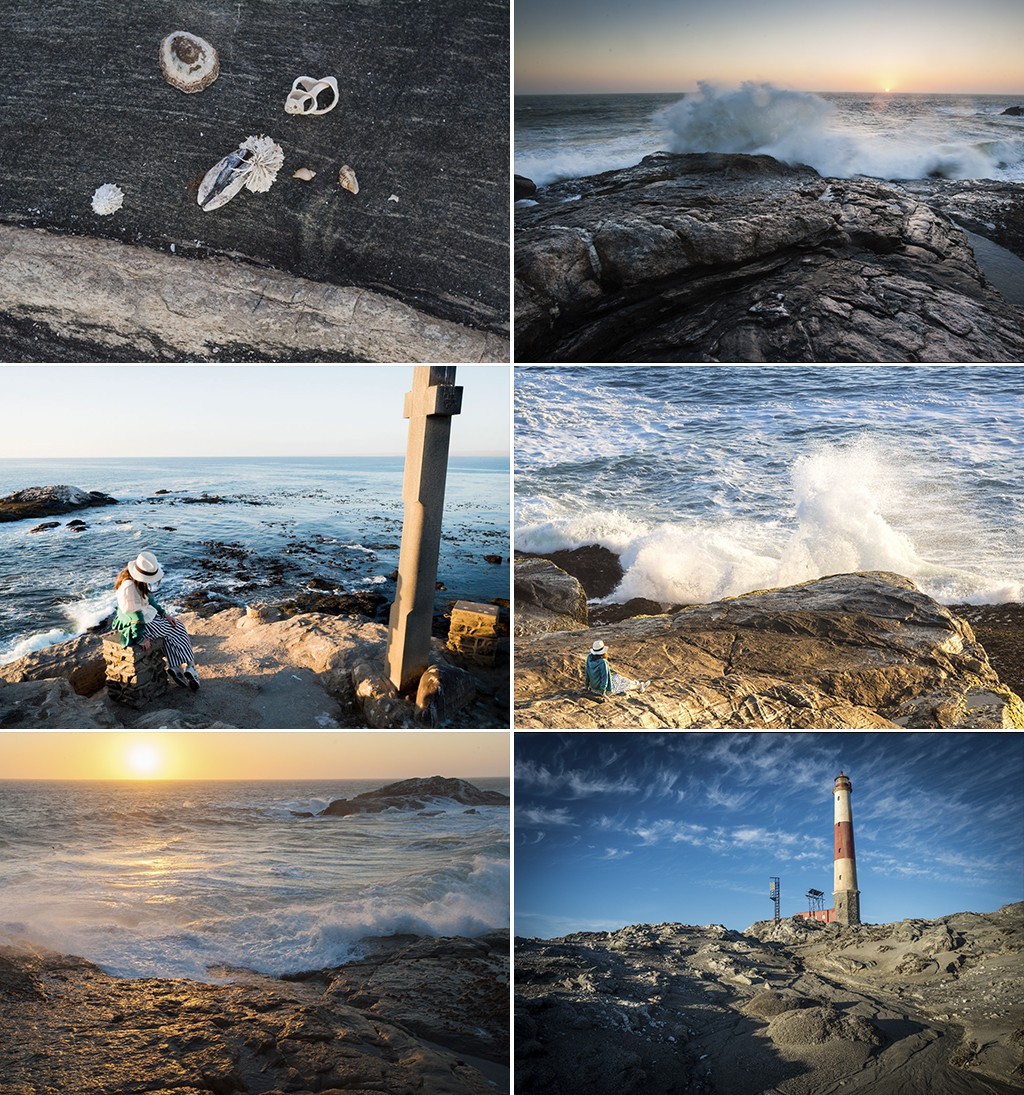
On our outing, we may encounter flamingos, seals, and pelicans. And as a delightful bonus, we’ll enjoy breathtaking seascapes, dramatic rocky coastlines, and a deckside picnic of fresh oysters with champagne during our cruise.
We’ll return to the hotel and spend the evening at a restaurant overlooking the quieting bay.
Transfer to the Namib Desert · Desert Lodge Stay · Sossusvlei & Deadvlei Oases · Dune 45 · Sesriem Canyon
Driving time:
Right after a hearty breakfast, we set out. Today, our route follows the edge of the world’s oldest desert. The Namib Desert has existed — with only brief “pauses” — for more than 20 million years.
It’s a long but extraordinarily beautiful drive. We’ll stop at remote farms for fuel and coffee, and eventually reach the oasis of Sesriem, in the very heart of the desert.
For dozens of kilometers around, there is no other settlement. We’ll stay at a comfortable eco-lodge near the entrance to Namib-Naukluft National Park.
In the evening, those who wish may admire the desert from the window of a private aircraft. Seeing the Namib from above is a breathtaking, grand-scale experience — one that truly reveals the planet’s magnitude. Words hardly do it justice. (Just look at the photos!) Guests interested in a one-hour flight should let us know in advance.
Dinner will be served at the lodge restaurant. Antelope graze in the distance. The setting sun paints the desert in deep shades of orange. Evening coolness settles in. The first stars appear in the sky. Campfire flames, salads and desserts, several varieties of game, and excellent wine — and all around, the vast black night of the desert.
But our main destination in the reserve is the mysterious Deadvlei.
The road leads us to the dry riverbed of the Tsauchab River. These stunning landscapes have been largely uninhabited since ancient times. Indigenous hunter-gatherer tribes preferred regions rich in vegetation, avoiding this vast emptiness. And despite the presence of lodges and restaurants today, the area still radiates the solemn beauty and grandeur of places the human hand has barely touched.
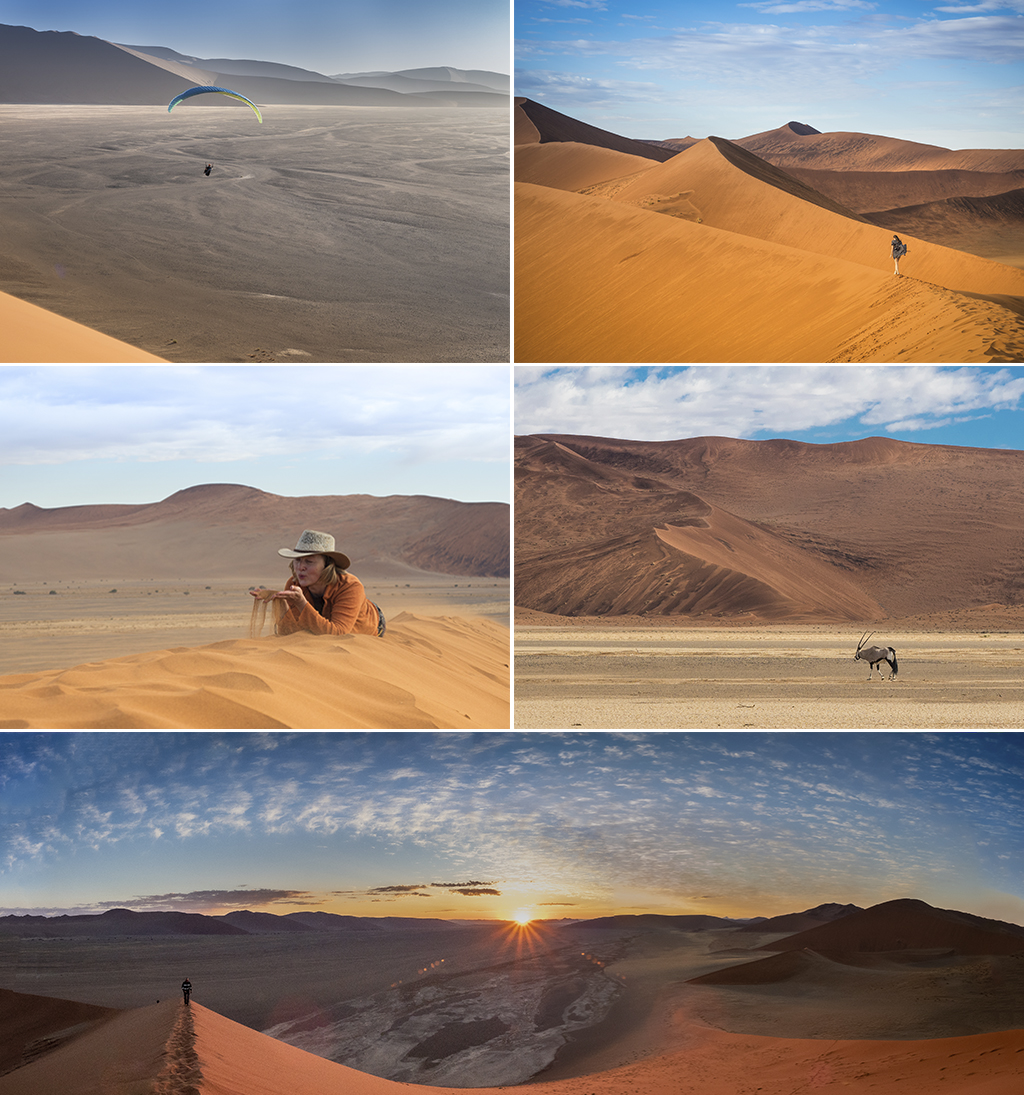
The Tsauchab Valley is part of the national park, where living and hunting are prohibited. We enter with a special permit and follow the riverbed toward the oases of Sossusvlei and Deadvlei. On both sides of the road, mighty dunes rise like walls shaped by an unseen hand. Antelope streak across the plains. In the distance, hot-air balloons slowly ascend above the hills.
After about an hour, the sands converge — the river and the road both end at Sossusvlei. Spreading tamarisk and acacia trees draw water from underground sources close to the surface here. The shade of these groves shelters wandering antelope from the fierce desert sun.
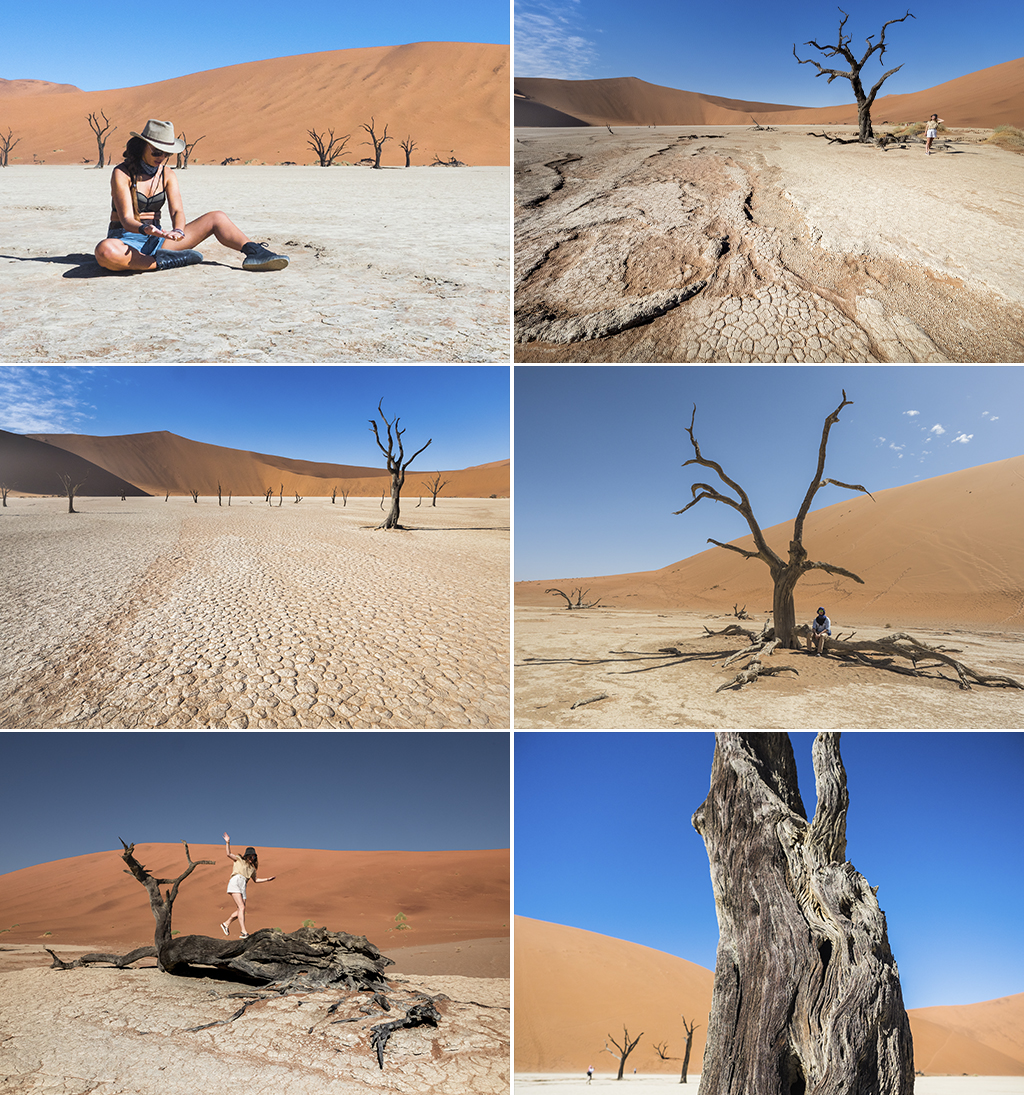
Nearby lies Deadvlei — which in Afrikaans means “dead marsh.” This surreal place has become one of Namibia’s most iconic landscapes. What was once a lush green oasis is now a lakebed of cracked, white clay and the blackened skeletons of dead acacia trees. Towering orange dunes surround the “marsh,” their ridges shedding fine sand into the air with every gust of wind.
No one knows exactly what happened here — the desert keeps its secrets. All that remains is to take in these otherworldly, almost cosmic views and absorb the powerful, ancient energy of the Namib.
Transfer to Swakopmund — a slice of Germany between desert and ocean · Visit to Sandwich Harbour, where the dunes meet the sea
Total driving time: approximately 5 hours
Sandwich Harbour excursion: approximately 3 hours
Once again, we’re back on the road. A scenic route carries us through desert landscapes and canyons toward the coast, to the outskirts of the town of Walvis Bay. Here, we’ll switch to 4×4 vehicles and head for a truly spectacular place where the Namib dunes meet the ocean.
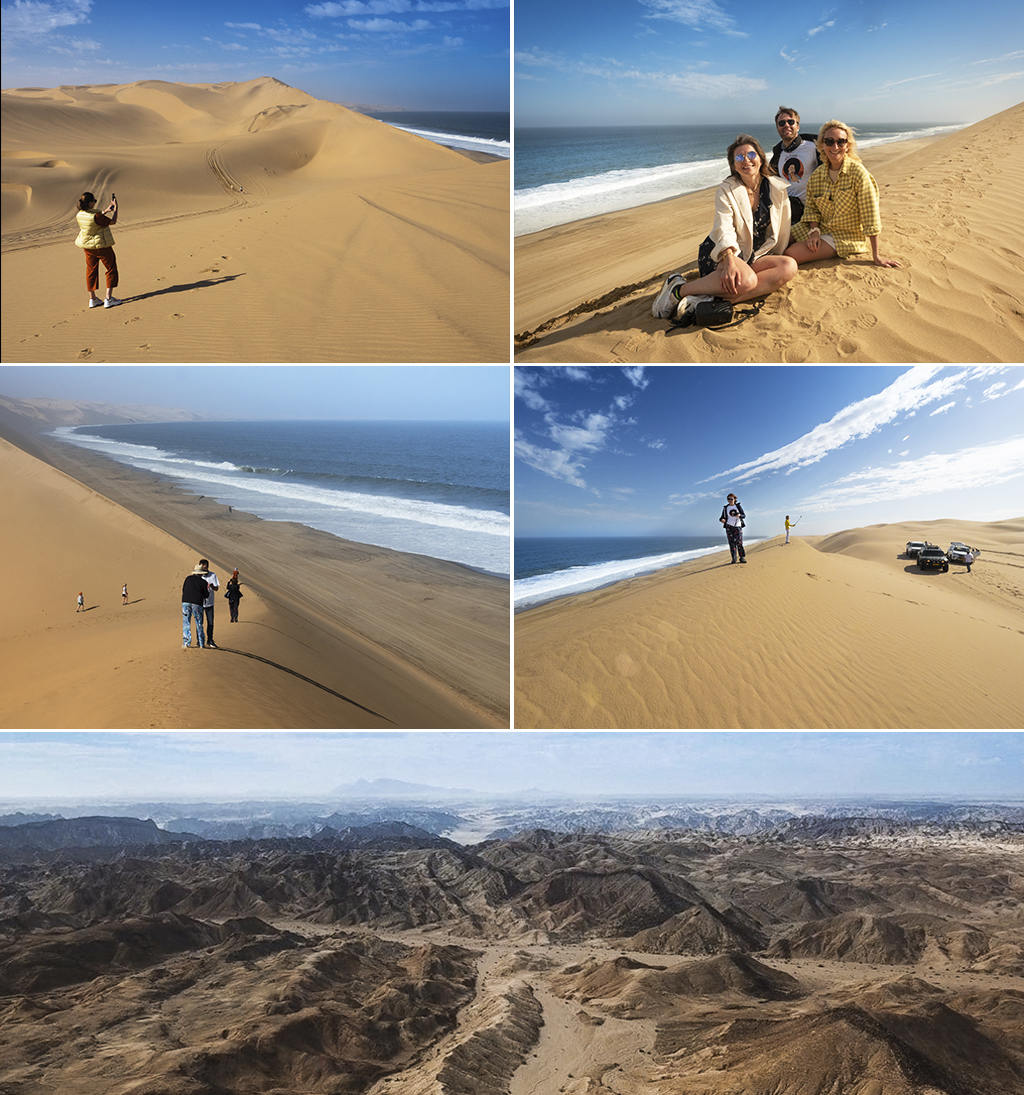
On the way back, we’ll visit a flamingo colony. Pink wading birds “graze” in the shallow waters, foraging for food. This has long been one of their favorite gathering spots — and they come here only in winter.
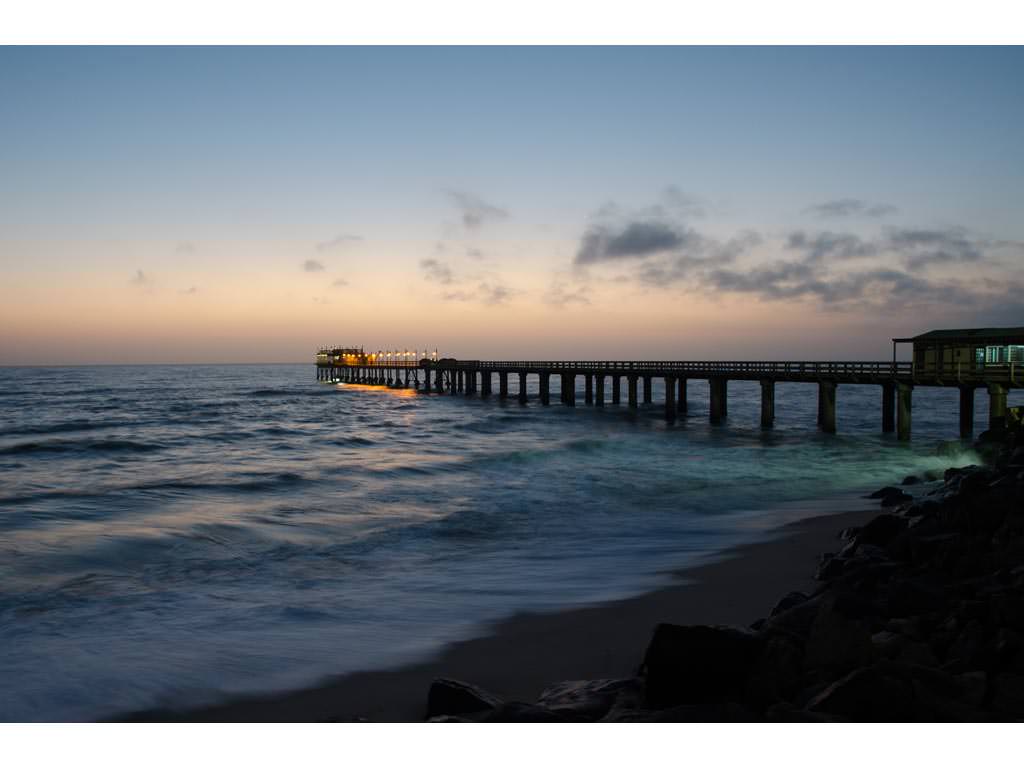
We’ll spend the evening in Swakopmund. Cozy, “Bavarian-style” half-timbered neighborhoods, nestled between towering dunes, rocky plains, and the open ocean, seem to underline the striking contrast of human life — carving out a small corner for itself within the vast, indifferent expanses of the planet.
Visit to Spitzkoppe — a reserve of unique rock formations · Ancient rock art · Geological wonders · The Damaraland Desert
Total driving time: approximately 5 hours
South of Kaokoland and north of the Namib Desert stretches the stony wilderness of Damaraland. Here, massive megoliths rise from the earth as if they had fallen from the sky and scattered across the land.
Out of this vast emptiness suddenly emerges Brandberg Mountain — a solitary, dark stone mass standing alone in the plains. Nearby, at Spitzkoppe, Stone Age settlements once existed thousands of years ago. The dramatic rock formations that delight us today once served as natural shelters for Bushmen tribes.
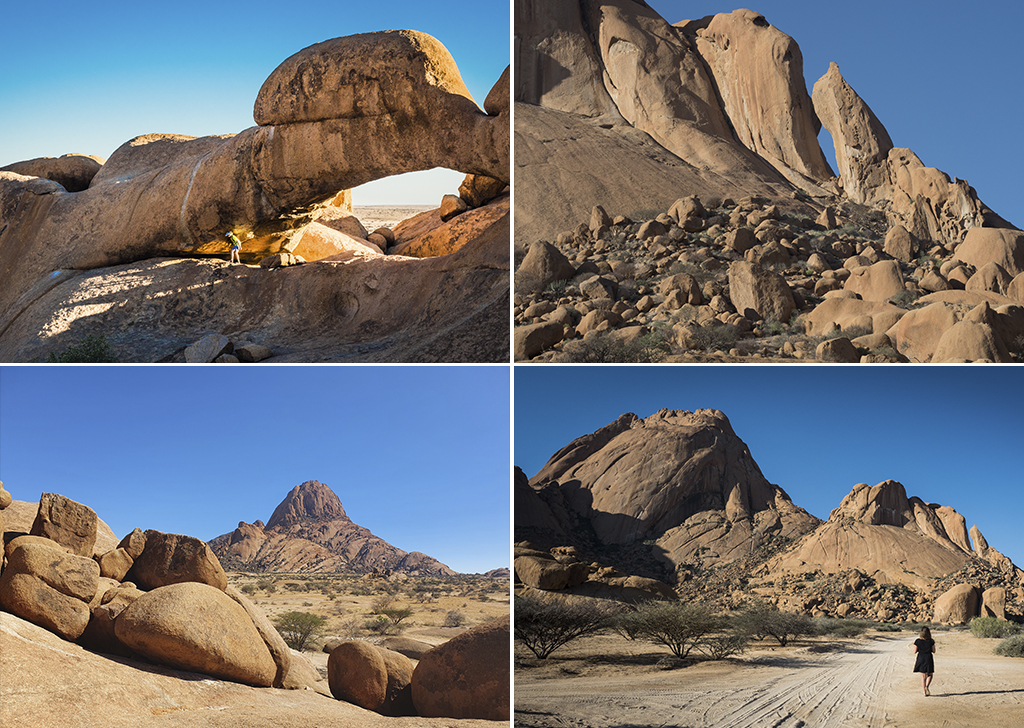
Our distant ancestors were not strangers to the pursuit of beauty. Guided by a timeless human desire for the sublime, they left behind remarkable evidence of that impulse. In Damaraland, we’ll encounter Stone Age rock art — beautifully preserved and renowned among enthusiasts around the world.
For the night, we’ll stay at a comfortable, spacious lodge, where in the evenings guests gather around the fire or relax at the poolside bar.
The nearest town lies dozens of kilometers away, leaving the air pure and crystal clear. Above, the deep sky glows with countless stars, while in the foreground boulders and cliffs trace their silhouettes. Sleep feels distant — a walk through this nocturnal, Stone Age world stirs the most ancient strings of the soul.
Transfer north to Etosha National Park · Visit to a Himba village
Total driving time: approximately 4 hours
The north is Namibia’s most populated region. Here, deserts and savannas gradually give way to greener landscapes, well suited to a semi-settled way of life. Along this narrow green belt in northern Namibia lives nearly half of the country’s population. This is home to Bantu-speaking peoples such as the Ovambo, Herero, and Himba — the latter widely regarded as one of the most beautiful ethnic groups on the entire continent.
We won’t reach the far northern edge of the country — it’s simply too remote — but on our way to Etosha National Park, we’ll visit a Himba village.
The Himba are true “stars” among African tribes. Unlike many others, they are rarely tempted by the comforts of modern civilization, choosing instead a traditional way of life tested over centuries. Perhaps this is partly due to the unique charm and striking beauty of their customs. In any case, we now have the rare opportunity to encounter a people who have changed neither their lifestyle nor their appearance in any significant way over the centuries.
We will most likely meet mostly women and children, as many adult men lead a semi-nomadic life and may spend months away with their herds. However, we will meet the village chief, and possibly other men who have chosen to remain to protect and care for the community. With some luck, we may even meet more of the men — though this can never be guaranteed, as the Himba are not a “museum tribe” and do not operate on a schedule.
Unlike some communities that maintain ancient traditions partly for commercial reasons, the life of the Himba feels deeply authentic. Of course, we do not arrive empty-handed — we bring gifts of food for the chief and the women, and we purchase their handmade crafts and jewelry. But within the village, you will sense the sincerity of these people and the primal purity of their way of life.
The Himba possess a strong presence. Common stereotypes quickly fade — the image of a hungry, fragile African pleading for help disappears. Setting aside unfamiliar forms of dress and different standards of hygiene, you’ll notice in their posture, movement, speech, and expressions — and in their elaborate traditional adornments — the confidence of people who know their own worth and stand firmly on their own ground.
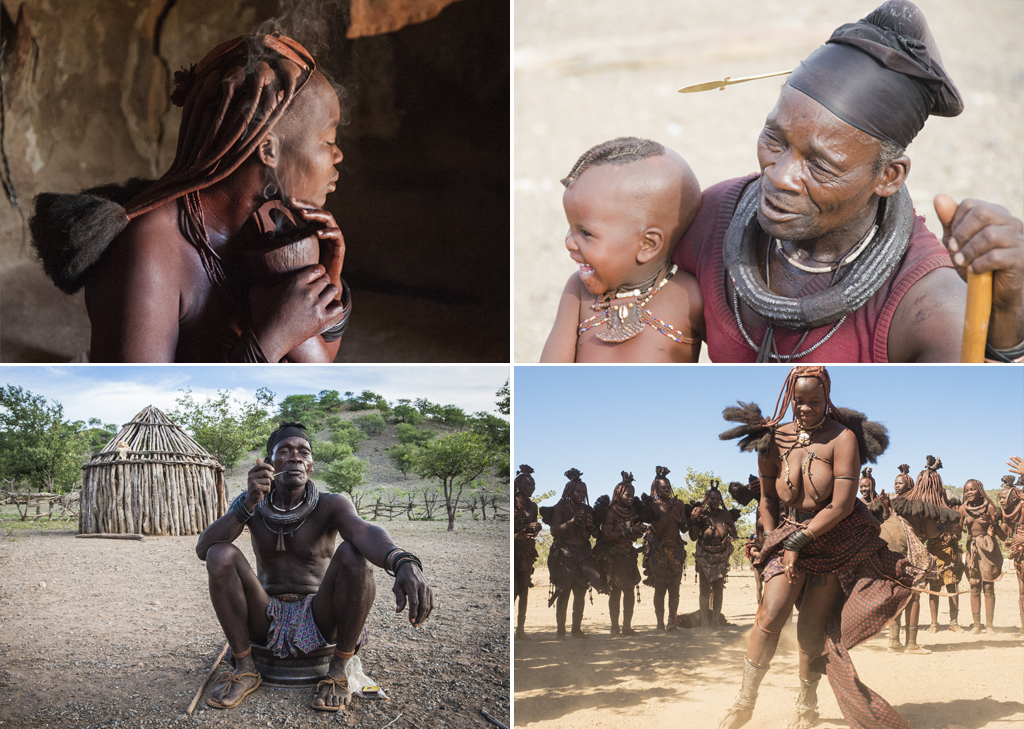
We’ll observe daily life in the village: child-rearing, food preparation, and the intricate and fascinating beauty rituals of the women. Those who wish may even try some of these time-honored practices themselves.
Later, we’ll continue to our lodge located right at the gates of Etosha National Park. Here, everything breathes with life — elephants and rhinos sometimes approach the lodge itself, and at night, they can often be seen at the nearby waterhole.
Safari in Etosha National Park — lions, elephants, rhinos, giraffes, and the great icons of the savanna
Duration of each safari: approximately 3 hours
Today, we reach one of Africa’s richest wildlife reserves — the great Etosha. Even before this day, we’ll encounter animals along the road: many species of antelope and birds, jackals, giraffes, zebras, and monkeys. But in Etosha, the concentration of wildlife reaches its peak.
We’ll first drive through part of the park in our own vehicle, then set out on a safari with an experienced guide in an open jeep. We have a chance to witness the extraordinary diversity of African wildlife — elephants, lions, cheetahs, leopards, rhinos, hyenas, zebras, numerous species of antelope, and countless birds. Some animals may appear along the way; others we are likely to encounter here for the first time.
Of course, a nature reserve is not a zoo — it is living wilderness that follows its own rhythms. There are no guarantees that every animal will appear on cue. But our chances of seeing a wide range of savanna wildlife are exceptionally high.
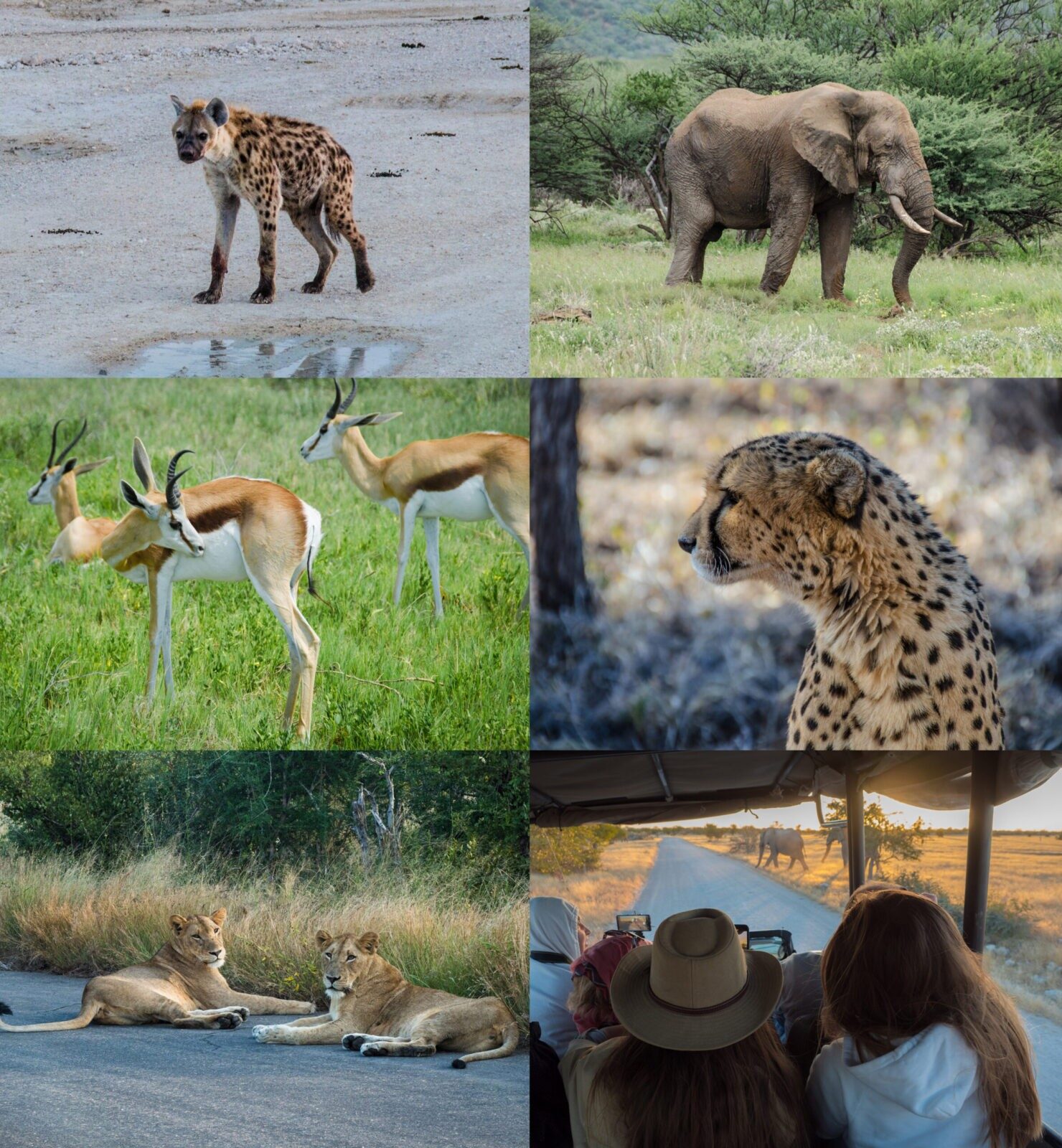
We’ll spend two nights in Etosha, staying right next to the park. There’s something thrilling about dining and falling asleep to the sounds of the wild savanna. There’s nothing to fear, however — the lodge is securely fenced and well guarded.
Return to the Capital · Farewell Dinner
Total driving time: approximately 6 hours
Today, we make our way back to Windhoek at an unhurried pace. Along the route, we’ll stop in a couple of small towns and at souvenir markets. Here, you can find everything from antelope hides and traditional Bushmen weapons to beautiful photo books and the famous dried game delicacy, biltong.
At our hotel near Windhoek, a farewell dinner awaits us. In the glow of candlelight, the sparkle of wine, happy smiles, and the glimmer of new plans, we’ll bring this journey to a close.
Transfer to Windhoek Airport · Departure Home
Transfer time: approximately 50 minutes